
#97: Back to Standard, Slop Fighting, ABAP Oldies


In this issue:
ABAP + SQL (+ ODBC)
Slop Is Substance, Not Form
Back To Standard?
Old School vs New School
Illusion Of Building
Even SAP Can Vibe
ABAP + SQL (+ ODBC)
While the blog post title Data Integration in ABAP Cloud: Data Exposure using SQL Services seems rather self-explanatory, I bet many ABAPers would be confused about this concept. Even I’m not entirely sure if this is what I think it is, but nevertheless it is worth bringing to your attention.
Per SAP Help, “Data integration is an approach to accessing data in a cross-system scenario for further processing or analysis.” But why is this part of ABAP Cloud?
From what I can tell, the blog post seems to talk about exposing data (CDS views, more specifically) to external SQL queries via ODBC. Everybody likes ODBC (it’s old but simple and reliable) and everybody likes SQL. If you’re thinking “is this finally the way to do SELECT FROM MARA in an Excel spreadsheet?!”, it’s a “yes but actually no” situation.
First, it doesn’t look like this is an option to read anything you want because, as described in the post, a CDS view needs to be specifically exposed for such consumption. This is a bummer for business users but a relief for SAP Security teams.
Second, it’s not clear how viable or costly this option would be in real life. No one wants to open an interface and then get a huge bill from SAP for indirect access fees or some such.
ODBC + SQL (even with ABAP in the middle) is a very attractive option to “have your data call my data”, though. JP
Slop Is Substance, Not Form
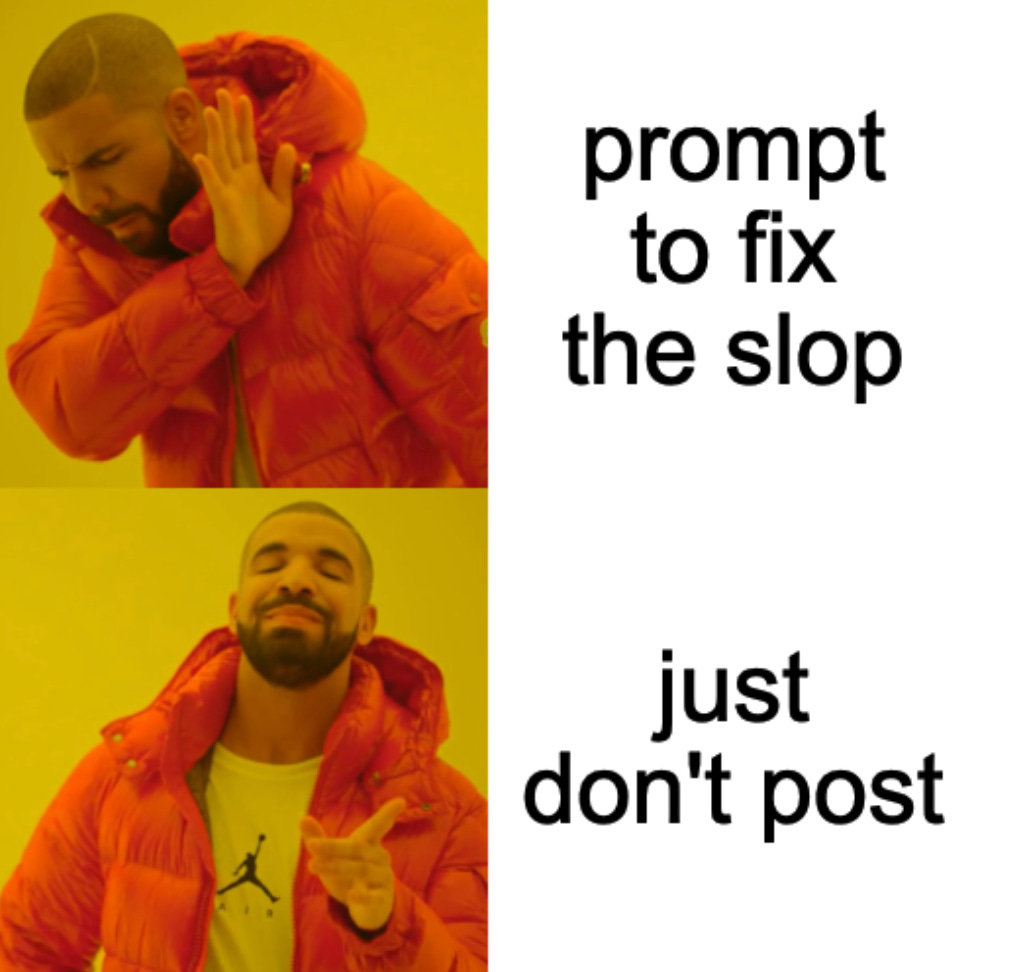
I came across this anti-slop advice post, and it struck me as the most insidious kind of slop combat. The outer signals of AI slop, like “it’s not [X], it’s [Y]”, em-dashes, and weird use of words like “quiet(ly)”, are not themselves bad. If you write/post/create something that includes these things…fine! Great! Write from the heart! The inner badness comes when those outer signals are not accompanied by any deeper reflection.
(The unfortunate thing is that you have to read a post/comment before you figure out that it’s worthless garbage. Since ain’t nobody got time for that, it’s easy to filter on the markers.)
The TikToker provides an anti-slop prompt which purports to fix up slop-looking stuff. But this is fixing the outer signal. All the prompting in the world can’t fix a bad or boring idea. It’s like drawing a smiley face on a gunshot wound. It looks nicer, but you’re still going to bleed all over your new carpet. PM
Back to Standard?
“Use standard”, “revert to standard” are SAP world’s equivalent of “eat healthy and exercise”. Right… So, why isn’t everyone doing it?
The article “Revert to Standard: Achievable Destination or North Star?” shows a very realistic example of how custom stuff happens in SAP and spreads its tentacles everywhere. For an outsider, it may seem like “just don’t add anything custom, duh.” But that is obviously unrealistic and not something SAP would expect. There are SAP-blessed ways to customize and enhance these systems, and in the given example, the customer did nothing wrong.
The custom field example, however, isn’t the biggest adventure on the voyage “back to standard”. Many customers have built quite elaborate solutions covering the gaps between SAP standard and their needs (or wants). And that’s what would be up for review in a typical ECC migration project or S/4HANA version upgrade.
A small percentage of such solutions probably shouldn’t be there and comes from misunderstanding of standard and lack of creativity. A large percentage is likely just fine as it is. But that’s the thing: how would you know for sure?
If only SAP spent as much time talking about existing functionality as they do talking about digital transformation, clean core, and “Gen UI,” we probably would be in a much better place, reverting-to-standard-wise.
Now, of course, the big question: is AI going to save us? The article is somewhat on the fence about it. I think It could work if SAP tells AI more about the standard and customers explain coherently what they actually need. Then AI would “mediate” based on that information. Is this something on the roadmap? Maybe we’ll get a surprise at SAPPHIRE in May? Stay tuned. JP
Old School vs New School
I’m not done talking about the 2025 Developer Insights Survey yet - I’ve got one more in me.
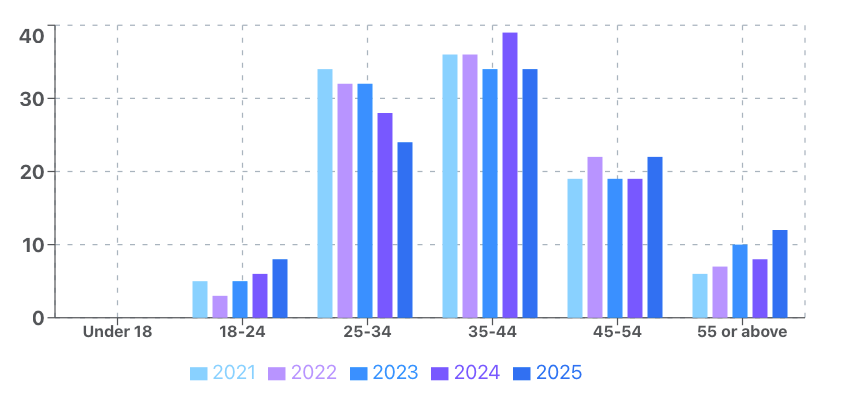
SAP gathers age statistics about the folks who respond to the call for the survey. Let me quote the commentary on the above image: “This merits deeper research as it potentially indicates either a gap in hiring younger employees to cover the normal aging of our community, or an outright loss of qualified younger staff. The two year trend in the 25-34 group reinforces that idea.” This finding rings true to me. You can see it out at events or in meeting rooms - the younger crowd doesn’t seem to be replenishing the grey hairs.
(It should rightly be titled “Developers Who Happened To Do The Survey Insights”, because there’s probably some kind of difference between those engaged enough to see the survey and those who don’t. Not a dig at SAP - this problem happens for any kind of online community survey.)
And yet…there’s this nagging part of me that wonders if this even matters. I’m genuinely curious how the industry will change as the perfect storm of AI capabilities and AI usage hits. Will there be less of a need for junior people, because so much can be done with so few? Will the opposite be true: that the ability to do more means a concurrent increase in more to do? Will enterprise software itself reshape around AI in such a way as the software world is unrecognizable? What skills and personalities will matter the most in 3 years? If any of these scenarios kick in - how long will it be until that happens? More questions than answers right now. Maybe that’s the way it’s always been. PM
Illusion of Building
Not to be a downer, but Marius Horatau’s essay Illusion of Building (and the related LI post) has a point: creating software “that appears to work” is very different from “engineering software that actually works”.
This is close to the subject of scale that I wrote about before, but Marius brings it home with great examples of a clay Bugatti and vibe-coding your own Google. Spoiler alert: neither actually works.
The best part of the essay for me is “What AI Actually Changes”. I think we could all use some “intellectual honesty” here and have more practical discussions rather than hyped-up ones. JP
Even SAP Can Vibe
Thomas Jung posts about building the new version of his hana-cli tool, and embraces AI in doing so. This is essentially a perfect piece about developer experience with using AI tools: honest, detailed, and helpful.
You have to ask yourself: if SAP is using AI agent coding tools to assist in the tools surrounding HANA, what about HANA itself? I could see a weird scenario emerging where tools and utilities move at light speed compared to the things they are meant to enhance. I think more teams that ship core backend products should write about their development process. It would be fascinating to find out how HANA itself is built - and whether that’s changed at all in the last couple years. PM

Watch our Nerdletter Talk 97 for details too hot to publish and exclusive bonus content for Platinum subscribers only.
Don’t miss Nerdcast Episode 025 with special guest and renowned ABAP expert Björn Schulz.
Are you interested in sponsoring the Nerdletter and featuring your amazing product? Have a story to share or feedback to give? Get in touch!
This newsletter is always free and proudly written by humans and for humans. Show your support and tell AI overlords who’s the boss!